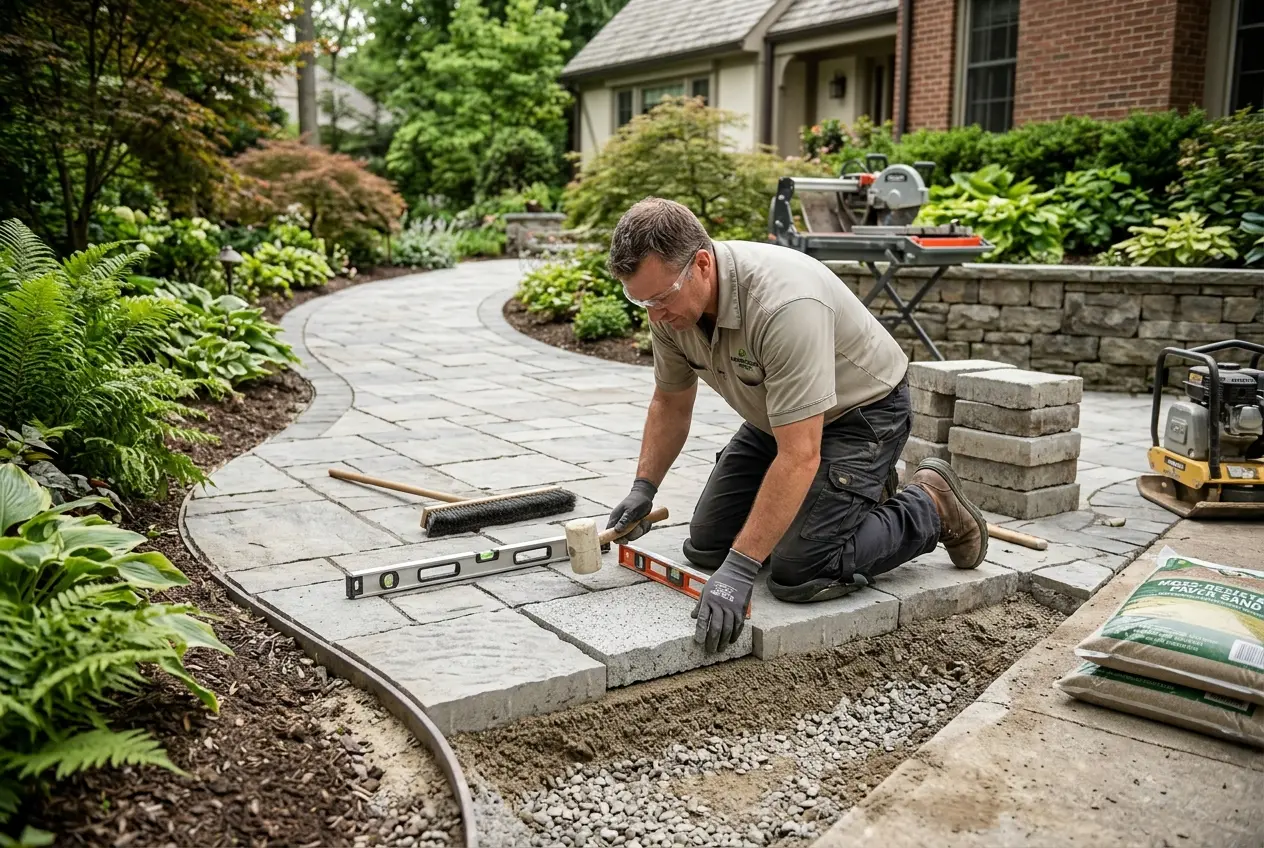
Portland's persistent dampness turns traditional hardscapes into slippery moss gardens within a single season. Our specialized installations use textured basalt pavers with built-in drainage channels and anti-microbial sealants that inhibit growth without harsh chemicals.
We design with slope calculations specific to Portland's average rainfall (36 inches annually), preventing pooling water that accelerates wood rot in adjacent structures. For existing installations, we offer a restoration service that retrofits drainage without full replacement.
All designs incorporate earthquake gaps - typically 1/2" expansion joints filled with flexible polymer - to accommodate our region's seismic activity without cracking.
We design with slope calculations specific to Portland's average rainfall (36 inches annually), preventing pooling water that accelerates wood rot in adjacent structures. For existing installations, we offer a restoration service that retrofits drainage without full replacement.
All designs incorporate earthquake gaps - typically 1/2" expansion joints filled with flexible polymer - to accommodate our region's seismic activity without cracking.
Our Process
- 01 Step 1: Site evaluation for existing drainage patterns and soil composition
- 02 Step 2: Custom design with 3D modeling showing water runoff paths
- 03 Step 3: Base preparation with crushed rock layers for frost heave protection
- 04 Step 4: Installation using moss-inhibiting techniques and seismic joints
Benefits
- Reduces slip hazards from moss growth
- Prevents water damage to home foundations
- Maintains appearance longer between cleanings
- Withstands minor seismic activity
Frequently Asked Questions
How often will I need to pressure wash these surfaces?
With our textured materials and sealants, most clients go 2-3 years between cleanings compared to annual pressure washing for standard installations.
Do you work with existing hardscapes?
Yes, we can retrofit most existing patios with drainage solutions and expansion joints, typically saving 40-60% versus full replacement.